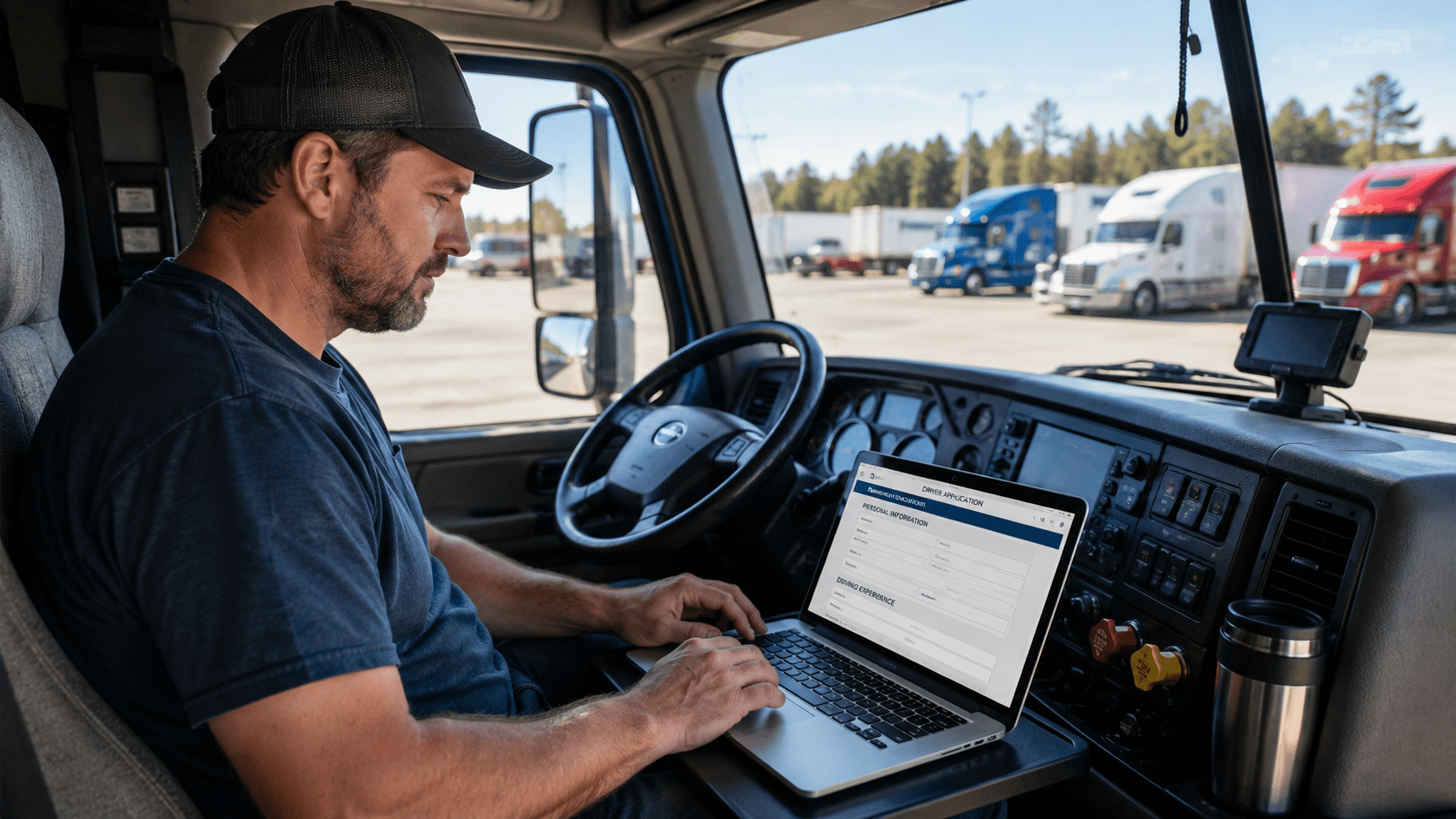
Truck drivers can find work in the United States through trucking job boards, carrier career pages, general job sites, and direct online forms. Many drivers start with searches like trucking jobs near me or truck driving jobs near me, then compare carriers.
Before they apply, it helps to compare the job type, pay plan, route, home time, equipment, and job needs.
Truck driving jobs in the US include over-the-road (OTR), regional, local, dedicated, team driving, owner-operator, lease-purchase, flatbed, dry van, refrigerated, tanker, intermodal, and hazmat jobs. Each type has a different pay plan, schedule, and experience need.
Drivers can apply through focused trucking sites and direct carrier websites.
CDLjobs.com lets drivers search CDL jobs by state, route type, trailer type, and company. It is useful for comparing many carriers in one place.
AllTruckJobs.com lets drivers browse truck driver jobs by driver type, freight type, or location. It also supports one application for many carriers.
HoraExpress also helps drivers find trucking jobs. It lists jobs from many carriers and helps applicants connect with employers faster.
Indeed lists many truck driver jobs from carriers, logistics companies, private fleets, and staffing firms. It is useful for comparing pay, benefits, location, and employer reviews.
Carrier sites such as U.S. Xpress, Schneider, J.B. Hunt, Swift, Werner, and other large fleets let drivers apply for company openings directly.
A truck driver application usually asks for:
For CDL driver jobs, applicants should be ready to share work history, commercial driving history, equipment experience, license details, endorsements, and safety records. Employers may also check past employer safety records.
Most professional truck driving jobs need a valid Commercial Driver’s License (CDL).
Many Class A CDL jobs also need:
Entry-level drivers may need Entry-Level Driver Training (ELDT) before earning a first Class A or Class B CDL, upgrading from Class B to Class A, or adding endorsements such as hazardous materials, passenger, or school bus.
Experienced drivers may need proof of past equipment experience, such as dry van, reefer, tanker, flatbed, doubles/triples, or heavy haul.
Local truck driver jobs often offer daily home time and shorter routes. They may also involve more loading, unloading, city driving, and customer contact.
Regional trucking jobs usually keep drivers in one region and may offer weekly home time.
OTR trucking jobs cover long trips across many states. They often pay more miles, but drivers spend more time away from home.
Owner-operator jobs are for drivers who own or lease their own truck. These roles can offer more freedom, but they also require business work like insurance, fuel planning, truck care, and cost control.
Dedicated trucking jobs serve one customer or lane. They often bring steadier freight and more set schedules.
Drivers should:
A strong application should show a safe driving history, steady work history, clear communication, and relevant experience for the truck driving job.
Before they accept an offer, drivers should compare pay structure, weekly miles, home time, detention pay, layover pay, sign-on bonuses, benefits, equipment age, rider policy, pet policy, and terminal locations.
The fastest way is to use trucking job boards that let drivers send one application to many carriers, then apply on carrier sites for the best match.
Most tractor-trailer jobs need a CDL. A Class A CDL is common for OTR, regional, dedicated, and many local tractor-trailer jobs.
Yes. Many carriers offer student driver, trainee, or recent CDL graduate roles. New drivers should look for entry-level CDL jobs and carriers that train new drivers.
Local jobs usually bring drivers home each day. OTR jobs move long-distance freight and may keep drivers on the road for days or weeks.
Flatbed transportation services help move freight that does not fit neatly inside a standard dry…
Truck driver pay can look simple from the outside, but the real number depends on…
Local routes can give owner operators a way to stay closer to home while still…
A pre trip inspection checklist helps CDL drivers inspect a commercial motor vehicle before driving.…
Truck driver grants and training-assistance programs can help eligible applicants pay for CDL training, truck…
CDL points usually mean points added to a driver’s motor vehicle record after traffic violations.…