
Flatbed transportation services help move freight that does not fit neatly inside a standard dry van or enclosed trailer. For shippers handling oversized, heavy, unusually shaped, or equipment-based loads, flatbed shipping offers flexibility, easier loading access, and practical routing options. This article explains where flatbed trucking services make sense, what advantages they provide, and how to prepare freight for a smoother move.
What makes flatbed transportation services different?
Flatbed transportation services use open-deck trailers rather than enclosed boxes, which means freight can be loaded from the top, rear, or sides. That open access is the core advantage: cranes, forklifts, and other equipment can position cargo more easily, especially when the load is long, wide, tall, or irregularly shaped. Instead of forcing freight into a fixed trailer space, trucking flatbed solutions adapt to the freight itself.
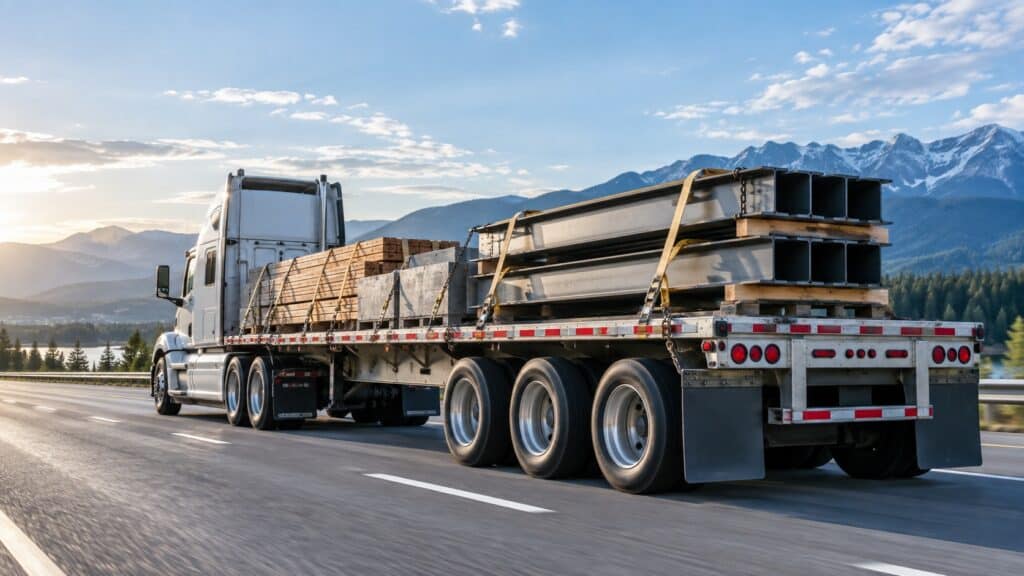
A standard flatbed truck is often used for construction materials, machinery, steel, lumber, agricultural equipment, pipe, and other cargo that can be secured on an open trailer. Because there are no walls or roof, the freight must be properly loaded, balanced, blocked, braced, and tied down. That makes experience especially important, both for the carrier and for CDL A flatbed drivers who understand securement, route conditions, and safe handling practices.
Flexible loading is a major advantage
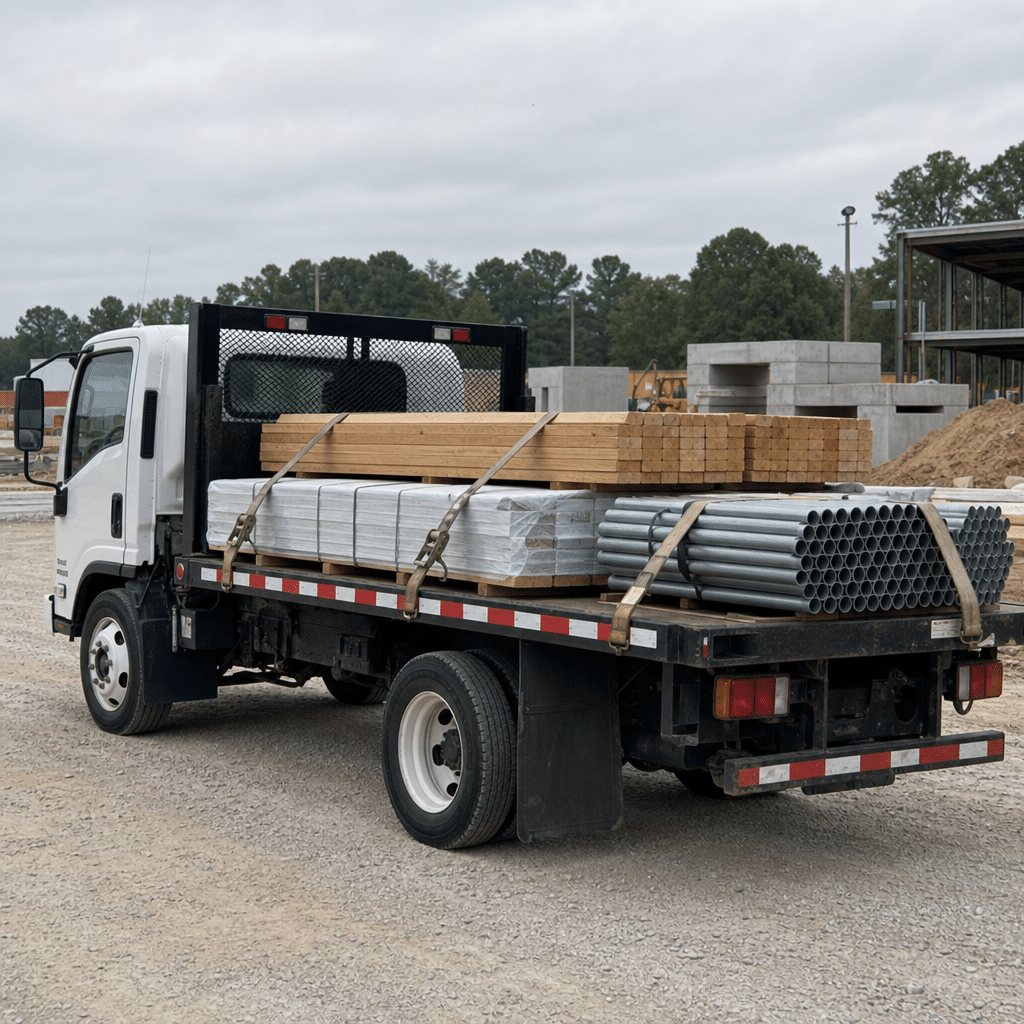
One of the biggest reasons shippers choose flatbed freight services is the loading flexibility. A dry van generally requires freight to enter through the rear doors, and that can create problems when cargo is too large, too heavy, or difficult to maneuver. With a flatbed, loading crews can use forklifts from either side or lift cargo directly onto the deck with a crane.
This flexibility matters in busy yards, construction sites, farms, manufacturing plants, and remote locations where dock access may be limited. Loading flatbed trucks can be more efficient when the site is not designed for traditional dock-height trailer loading. Crews can stage materials, approach the trailer from the safest angle, and secure each item with visibility from all sides.
Flatbed loading also helps when freight has an unusual center of gravity. Heavy machinery, steel bundles, or fabricated components may need specific placement to distribute weight correctly across the trailer axles. Because the deck is exposed, drivers and loaders can inspect positioning as the cargo is placed, rather than discovering a problem after freight is already inside an enclosed trailer.
Better fit for oversized and irregular freight
Flatbed trucking services are especially useful when a shipment is not shaped like a palletized cube. Many valuable loads are awkward by nature: long beams, tall tanks, large crates, equipment attachments, prefabricated sections, and materials that cannot be stacked. An open trailer gives shippers more room to work with the cargo’s actual dimensions.
This does not mean every large item can simply be placed on a flatbed truck without planning. Oversized freight may require permits, route review, escorts, flags, banners, lights, or special handling depending on the dimensions, weight, and jurisdictions involved. However, flatbed transportation services provide the platform that makes these movements possible in the first place.
For many industries, that capability is not a luxury. A job site may need beams delivered before crews can continue work. A plant may need replacement equipment to prevent downtime. A farm may need seasonal machinery moved within a tight operating window. Flatbed freight services help keep those projects moving when enclosed equipment would be too restrictive.
Flatbed shipping supports many industries
The versatility of trucking flatbed operations makes them useful across a wide range of sectors. While every shipment has its own handling requirements, flatbeds commonly support industries where freight is large, rugged, or project-based.
Common use cases include:
- Construction: steel beams, lumber, rebar, concrete forms, roofing materials, scaffolding, and heavy equipment attachments.
- Manufacturing: machinery, fabricated parts, industrial crates, tanks, piping, and production components.
- Energy and utilities: poles, cable reels, transformers, pipe, and site-support materials.
- Agriculture: tractors, implements, irrigation components, fencing materials, and bulk equipment.
- Infrastructure and public works: road plates, barriers, bridge components, drainage materials, and large replacement parts.
Because these industries often operate on tight timelines, the ability to load quickly and deliver directly to the point of use is valuable. A flatbed can often be unloaded in an open yard or active site without requiring a receiving dock. That can reduce handling steps and help freight get where it needs to be with fewer complications.
Why do shippers choose flatbed trucking services over enclosed trailers?
Shippers choose flatbed trucking services when freight size, shape, loading needs, or delivery conditions make enclosed trailers impractical. A flatbed offers open access, more adaptable securement, and better suitability for cargo that cannot be easily loaded through rear trailer doors. In many cases, it is the most practical way to move heavy equipment, building materials, and project freight safely and efficiently.
The decision often comes down to the freight’s physical requirements. If the cargo needs crane loading, side loading, top loading, or special placement, a flatbed is usually a strong option. If the destination has no dock, limited maneuvering space, or outdoor unloading conditions, a flatbed may simplify the process.
There is also a visibility advantage. With open-deck hauling, the driver can inspect the load and securement points during transit stops. Tarps, chains, straps, binders, edge protectors, and blocking can be checked and adjusted when needed. That does not remove the need for careful preparation, but it does support ongoing awareness throughout the shipment.
Load securement is central to safe flatbed freight
Flatbed freight is exposed, so securement is not an afterthought. The strength of flatbed transportation services depends on careful planning before the truck leaves the loading site. Freight must be positioned correctly, secured with appropriate equipment, and protected from movement, abrasion, and weather when necessary.
A professional approach to loading flatbed trucks should consider:
- Weight distribution The load should be placed so weight is balanced across the trailer and legal axle limits can be maintained.
- Securement method Chains, straps, binders, blocking, bracing, and specialized tie-downs should match the freight type and weight.
- Edge protection Sharp or rough cargo can damage straps, so edge protectors help preserve securement strength.
- Weather protection Some open-deck freight can travel uncovered, while other loads may require tarping to protect surfaces, packaging, or sensitive components.
- Inspection access Drivers need the ability to check tie-downs and cargo condition during the trip, especially after initial movement.
This is where experienced CDL A flatbed drivers add real value. Flatbed driving requires more than moving a truck from one point to another. Drivers often participate in securement checks, understand how loads behave on the road, and recognize when adjustments are needed.
Reduced handling can protect freight and schedules
Every time freight is transferred, repositioned, or repackaged, there is another chance for delay or damage. Flatbed trucking services can reduce unnecessary handling by allowing cargo to be loaded at origin and unloaded directly where it is needed. For large materials or equipment, that directness can be a major benefit.
For example, construction materials may be delivered to a staging area near the work zone rather than to a warehouse dock. Machinery can be placed in a plant yard where riggers can access it. Long materials can be lifted off in bundles instead of broken down into smaller loads that require extra labor.
This practical advantage can support better scheduling. When a project depends on the arrival of a specific component, simplified loading and unloading may help reduce bottlenecks. The benefit is not only transportation speed; it is the ability to coordinate the shipment with how the receiving team actually works.
Flatbed freight services can improve site accessibility
Not every shipment begins or ends at a polished distribution center. Many flatbed deliveries happen at jobsites, rural properties, industrial yards, utility corridors, or temporary project locations. These environments may not have docks, enclosed receiving areas, or standard warehouse equipment.
A flatbed truck is often better suited to those conditions because unloading can happen in the open. If the receiver has a forklift, telehandler, loader, or crane, the freight can often be removed from the most convenient side. That makes flatbed transportation services useful for sites where space, ground conditions, and equipment access shape the delivery plan.
Good communication is essential. Shippers should confirm site hours, unloading equipment, ground stability, access roads, turning space, and any safety requirements before the truck arrives. A flatbed is flexible, but it still needs a realistic plan.
How should you prepare for a flatbed shipment?
You should prepare for a flatbed shipment by confirming freight dimensions, weight, loading method, protection needs, and delivery conditions before booking. The more accurate the shipment information, the easier it is to match the load with the right equipment, driver experience, securement tools, and route plan. Good preparation helps prevent delays, rework, and avoidable safety concerns.
Use this checklist before scheduling flatbed freight services:
- Measure the cargo’s length, width, height, and total weight.
- Identify whether the load is stackable, fragile, painted, machined, or weather-sensitive.
- Confirm whether cranes, forklifts, ramps, or riggers are needed at pickup and delivery.
- Share photos or diagrams when freight shape may affect securement.
- Clarify whether tarps are required and what areas need protection.
- Confirm pickup and delivery contact details, site access, and operating hours.
- Note any permit concerns for over-dimensional or overweight cargo.
- Make sure the freight is ready before the truck arrives to avoid waiting time.
Preparation also includes packaging and labeling. Even rugged freight should be protected where securement equipment contacts the cargo. If multiple pieces are shipping together, clear identification helps the receiving team unload and organize materials efficiently.
The right partner makes the service more valuable
The advantages of flatbed transportation services depend heavily on execution. The right provider should understand the freight, ask practical questions, and help identify the correct trailer type, securement approach, and pickup plan. A low-effort booking process is convenient, but it should not replace careful freight review.
When evaluating flatbed trucking services, look for a provider that communicates clearly about load requirements and site conditions. The team should be comfortable discussing equipment access, tarping, permits when applicable, and driver expectations. If a shipment involves specialized cargo, it is better to address details early than to troubleshoot after the truck is already on site.
CDL A flatbed experience is also important. Skilled drivers understand that open-deck freight changes with road vibration, weather, and terrain. They know the importance of securement checks and careful handling during loading and unloading. That experience supports safer, more dependable service for shippers and receivers alike.
Key takeaways for shippers
Flatbed freight services are a strong option when standard enclosed trailers cannot meet the freight’s practical needs. They offer open loading access, flexibility for unusual cargo, and better compatibility with jobsite or yard delivery. For industries that move heavy, oversized, or project-critical materials, those benefits can make a meaningful difference.
Remember these points when planning your next flatbed shipment:
- Flatbeds are useful for large, heavy, long, tall, or irregular freight.
- Side, top, and crane loading can simplify difficult moves.
- Proper securement is essential because cargo travels on an open deck.
- Accurate dimensions and weights help match the right equipment.
- Delivery site details matter as much as pickup details.
- Experienced flatbed drivers and carriers help reduce avoidable problems.
Flatbed transportation is not just about having an open trailer. It is about matching the freight, equipment, driver skill, securement plan, and site conditions into one coordinated move.
A practical solution for demanding freight
Flatbed transportation services give shippers a flexible way to move freight that is too large, heavy, or awkward for standard trailer options. From loading flatbed trucks at a manufacturing yard to delivering materials directly to a construction site, flatbed shipping solves real-world transportation challenges with access, adaptability, and practical efficiency.
For the best results, start with accurate freight details and choose flatbed trucking services that take planning seriously. When the right flatbed truck, securement method, and CDL A flatbed driver come together, even complex freight becomes easier to manage from pickup to delivery.