


Truck driver pay can look simple from the outside, but the real number depends on route type, experience, freight, location, schedule, and how the carrier pays. If you are asking how much a truck driver can make, the most useful answer is a realistic range, not one eye-catching number from a job ad. This guide breaks down trucker salary expectations in the USA in plain language so you can compare offers, plan your monthly income, and ask better questions before you accept a driving job.
How much do truck drivers make on average?
Truck drivers in the United States commonly earn in the high five figures, but the “average” depends on the data source and the exact type of driving job. O*NET, using Bureau of Labor Statistics wage data, lists heavy and tractor-trailer truck drivers at an average annual wage of $58,640, while the BLS Occupational Outlook Handbook lists a May 2024 median annual wage of $57,440 for heavy and tractor-trailer drivers. In everyday terms, when people ask how much truck drivers make on average, a practical baseline is around the upper-$50,000s before taxes, benefits, deductions, and business expenses. (onetonline.org)
Does that mean every driver earns that amount? No. A median or average semi truck driver salary gives you a midpoint, not a promise. New drivers, local delivery-style roles, part-time schedules, low-mile weeks, or slower freight markets may land that figure below, while experienced CDL drivers, specialized freight drivers, team drivers, and some long-haul drivers may earn more.
If you are wondering how much truckers make a year, start with the annual number, then work backward. A $58,640 annual figure equals about $4,887 per month before taxes if pay were spread evenly across 12 months. That helps answer how much do truck drivers make a month, but trucking income is not always smooth. A driver paid by the mile may have strong weeks, slow weeks, weather delays, home-time gaps, or detention time that changes the actual paycheck.
The way a driver is paid matters as much as the amount
Truck driver salary conversations in the USA often focus on annual pay, but the pay structure matters just as much. Why? Because two jobs can advertise similar yearly earnings while paying in completely different ways. One may offer steady hourly work, while another may rely on miles, bonuses, and freight availability.
Mileage pay
Many semi-truck driving jobs are paid by the mile. The BLS notes that heavy and tractor-trailer drivers are usually paid based on miles driven, often with bonuses, and that the per-mile rate can vary by employer, cargo, and experience. (bls.gov)
Is mileage pay bad? Not necessarily. It can work well when freight is consistent, routes are planned efficiently, and the carrier keeps drivers moving. The challenge is that unpaid or lower-paid time can affect take-home pay, including waiting at a shipper, sitting in traffic, or losing miles because of equipment issues.
Hourly, daily, or salary pay
Some local, regional, yard, construction, and private fleet jobs may use hourly, daily, or salary-based pay. Is that better than mileage pay? It depends on your priorities. Hourly pay may feel more predictable, especially if loading, unloading, customer stops, or city driving are part of the job. Salary can be simple to budget around, but drivers should still ask what schedule, overtime expectations, and home-time rules come with it.
Percentage and owner-operator pay
Some long-distance drivers, especially owner-operators, may be paid a share of shipping revenue rather than a simple wage. That can make the headline number look attractive, but owner-operator income is not the same as employee pay. Fuel, maintenance, insurance, truck payments, permits, downtime, and taxes can all come out before the driver knows true profit.
So, how much does a trucker make as an owner-operator? The honest answer is that gross revenue can differ greatly from net income. If you are comparing an owner-operator opportunity with a company driver role, compare what you keep, not what the truck grosses.
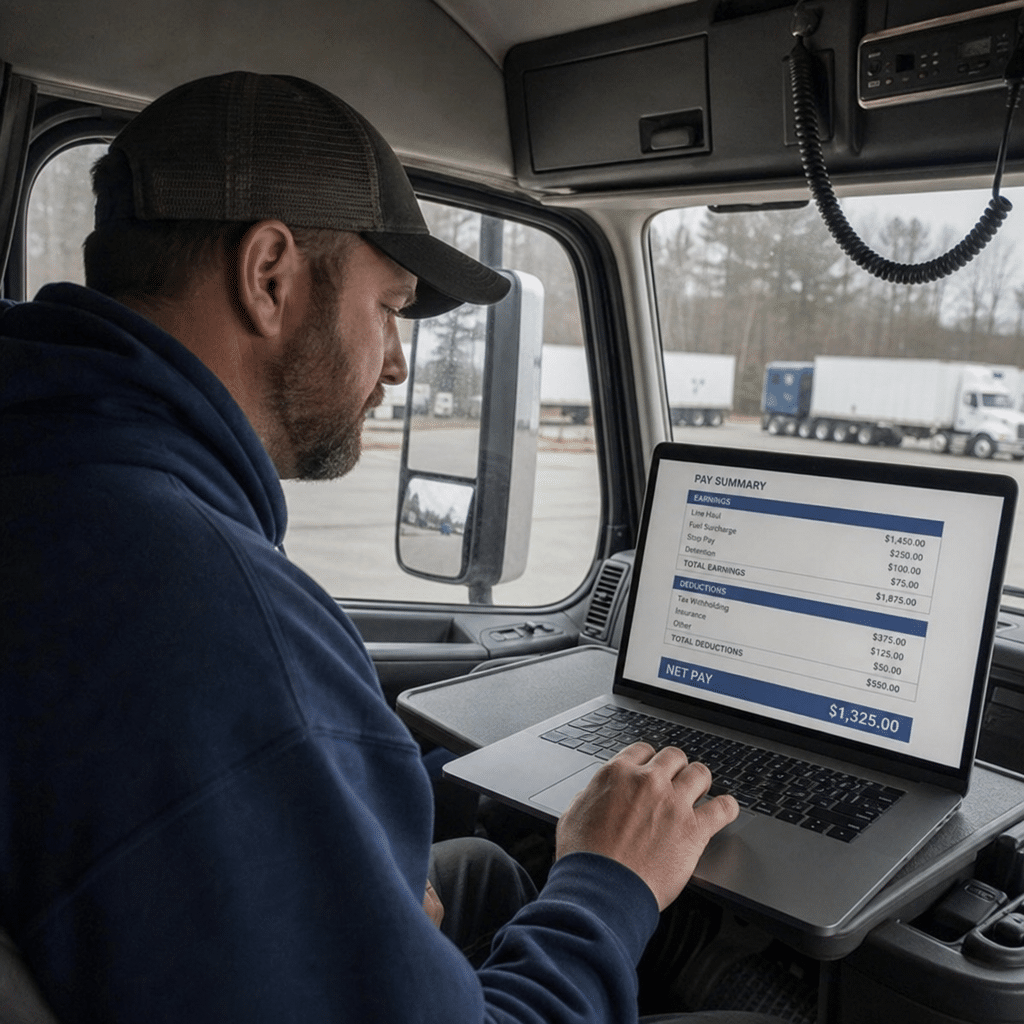
Key factors that shape trucker average salary
The average pay for truck drivers is influenced by more than miles alone. A driver’s license class, endorsements, freight type, route, and lifestyle preferences can all move the number up or down. Think of semi driver salary as a mix of skill, time, risk, consistency, and market demand.
Here are the biggest factors to look at:
- Experience level: New CDL drivers often start with more basic routes or training periods. Experienced drivers with safe records may qualify for stronger mileage rates, preferred routes, or specialized freight.
- Route type: Local work may provide more home time, while regional or over-the-road roles may offer more miles. More miles can mean higher earning potential, but also more time away.
- Freight type: Dry van, refrigerated, flatbed, tanker, oversized, car hauling, and hazardous materials can pay differently because they require different skills, equipment, and responsibilities.
- Endorsements: A CDL with endorsements may open doors to specialized work. For example, hazardous materials drivers must meet additional requirements, and the BLS notes that HAZMAT drivers need a hazardous materials endorsement. (bls.gov)
- Location: Pay can vary by state, metro area, freight lane, and cost of living. A job in a high-demand freight region may not pay the same as a similar role in an area with less freight density.
- Carrier type: Large national carriers, private fleets, small regional companies, and owner-operator arrangements may all structure compensation differently.
- Home time: More time at home can be worth a lot personally, but it may reduce earning potential if it means fewer miles or fewer available loads.
Is the highest-paying job always the best job? No. A higher commercial driver salary may come with nights, weekends, longer time away, tighter delivery windows, physical unloading, or more complex freight. The best offer is the one where the pay, schedule, safety culture, equipment, and expectations all make sense together.
How much does a long-distance truck driver make?
A long-distance truck driver often has higher earning potential than some short-haul roles because the job can involve more miles, longer trips, and more time away from home. The BLS describes long-haul trucking as a lifestyle choice because drivers may be away for days or weeks, and it also notes that most tractor-trailer drivers are long-haul drivers moving goods over intercity routes that may cross several states. (bls.gov)
So, how much does a long-distance truck driver make in practical terms? Many drivers use national heavy and tractor-trailer wage figures as a baseline, then adjust up or down based on miles, freight type, bonuses, and experience. A long-haul job with consistent freight can outperform a low-mile local role, but a long-haul job with poor planning, unpaid wait time, or frequent resets away from home may not feel as strong as the advertised annual estimate.
Here is the simple way to think about it: long-distance work can increase the ceiling, but it does not automatically increase your net quality of life. Ask yourself, “Am I being paid for the parts of the job that take my time?” The answer should include mileage, detention, layover, breakdown, loading, unloading, safety bonuses, and home-time policies.
Turning annual pay into monthly expectations
When drivers ask how much do truckers make a year, they are often really asking, “Can I build a stable life around this income?” The answer can be yes, but you need to budget around gross pay, taxes, benefits, deductions, and pay variability. A job that averages well over a year may still have uneven paychecks from week to week.
Use this quick planning checklist before you rely on any posted semi truck driver pay number:
- Start with the realistic annual estimate. Use the employer’s expected range, then compare it with national wage data for heavy and tractor-trailer drivers.
- Break it into monthly gross pay. Divide annual pay by 12. For example, $58,640 is roughly $4,887 per month before deductions.
- Estimate taxes and deductions. Account for federal, state, and local taxes where applicable, plus health insurance, retirement contributions, uniforms, union dues, or other deductions.
- Ask about unpaid time. If the job is mileage-based, clarify detention pay, layover pay, breakdown pay, stop pay, and orientation or training pay.
- Plan for slow periods. Freight, weather, maintenance, and personal home time can all affect the size of a paycheck.
- Compare lifestyle costs. Over-the-road drivers may spend money on meals, showers, laundry, parking, and supplies while away from home.
What if a recruiter says the role pays “up to” a big number? Treat that as the top end, not the average. Ask how many drivers actually reach that number, what schedule they work, what freight they haul, and how long they have been with the company.
Strong job offers explain the whole compensation package
A solid truck driving offer should be easy to understand. If the company cannot explain how the pay works, that is a sign to slow down and ask more questions. You are not being difficult. You are making a career decision.
Before you accept a job, ask questions like these:
- How is pay calculated? Ask whether it is mileage, hourly, salary, percentage, or a combination.
- What is the expected weekly mileage or weekly schedule? A rate means little without volume.
- Are there guaranteed minimums? A minimum weekly pay can help smooth out slow periods, but read the conditions.
- What bonuses are realistic? Safety, fuel, referral, sign-on, and performance bonuses may have rules that affect whether you actually receive them.
- How often will I be home? Home time affects both income and lifestyle.
- What expenses come out of my check? Ask about equipment, escrow, uniforms, insurance, benefits, and any repayment agreements.
- What happens during breakdowns or delays? Waiting is part of trucking, and the pay policy matters.
- What training pay applies? New drivers should understand paid training, mentor periods, and when full pay begins.
Is it okay to compare multiple offers? Absolutely. Comparing offers is one of the smartest things you can do. Just make sure you compare the full package, not only the biggest annual number.
A practical way to judge whether the pay is worth it
Salary expectations should include money, time, and stress. That may sound obvious, but trucking has a unique trade-off: a job can pay more because it asks more from your body, schedule, family life, and attention. The BLS also notes that heavy and tractor-trailer drivers can have physically demanding work, and that long-haul drivers may spend long periods on the road. (bls.gov)
Try this simple evaluation method:
- Pay: Does the expected income support your monthly budget?
- Predictability: Are miles, hours, and pay policies consistent enough to plan around?
- Home time: Does the schedule fit your family, health, and personal goals?
- Safety: Does the company maintain equipment and respect legal driving limits?
- Growth: Can you move into better routes, specialized freight, training, dispatch, safety, or ownership later?
Would you take slightly less pay for better sleep, better equipment, and more predictable home time? Many drivers would. Would you stay out longer for a higher annual income goal? Some drivers would. The right answer depends on your stage of life and what you want trucking to provide.
Final takeaway on truck driver pay expectations
So, how much can a truck driver make? A realistic national baseline for heavy and tractor-trailer drivers sits around the upper-$50,000s annually, with many individual outcomes landing above or below that based on experience, route type, freight, location, and pay structure. The best way to understand how much truckers make is to look beyond the headline number and ask how the paycheck is actually built.
If you are comparing trucker average salary, average semi truck driver salary, or any advertised commercial driver salary, focus on the details that shape real income: miles, hours, bonuses, deductions, home time, and unpaid delays. A clear offer should help you estimate weekly, monthly, and yearly pay without guesswork. When the numbers and lifestyle both make sense, you are in a much better position to choose a trucking role with confidence.