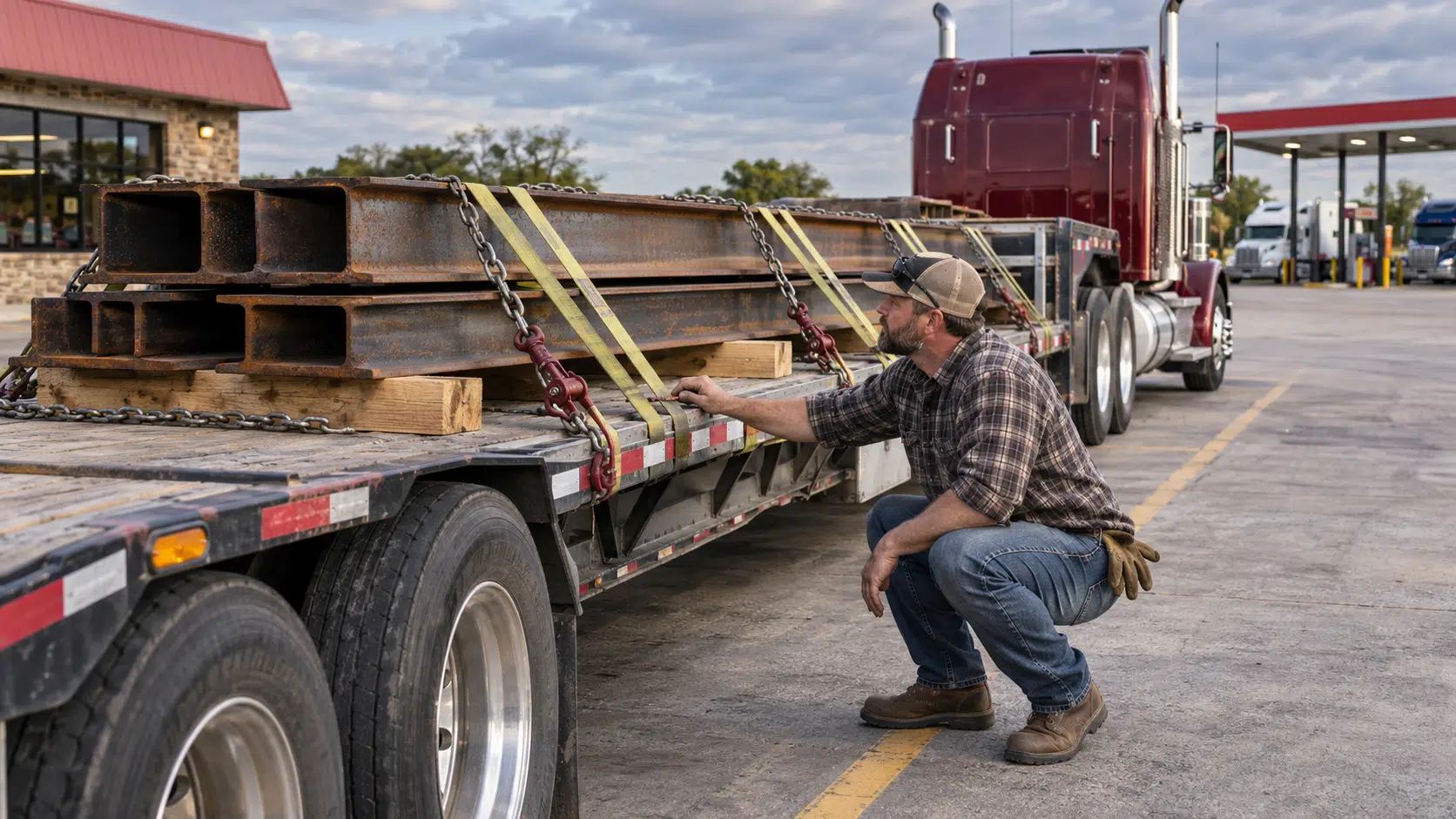
Step deck owner-operator jobs can appeal to drivers who want to haul taller freight with an open-deck trailer. The best opportunity depends on the freight, contract, equipment and costs, not just the percentage or rate in the advertisement. Compare several carriers before making a commitment. You can also explore Hora Express opportunities.
A step deck has an upper deck and a lower main deck. The lower deck can offer additional clearance for certain loads, but legal dimensions depend on the complete loaded vehicle and route. Ask what cargo the carrier regularly moves, how it loads the freight and whether the work includes tarping. Confirm typical loads and expectations before applying for work.
Confirm whether the carrier accepts your truck and trailer, their age, insurance and inspection status. Ask about straps, chains, binders, edge protection, ramps and other equipment the actual loads require. Do not assume the carrier supplies specialized gear or pays for it. Check replacement costs before purchasing any additional equipment.
When comparing step deck owner-operator jobs, a percentage of a load is meaningful only if you understand the base amount. Ask whether the carrier shows the rate confirmation and how it treats fuel surcharges, broker fees, accessorial payments and deductions. For mileage pay, confirm loaded and empty miles and who pays for repositioning. Request a sample settlement showing the full calculation.
Calculate your break-even cost using fuel, maintenance, tires, insurance, financing, taxes and expected downtime. Include your own labor and reserve for repairs. Compare several realistic trips, not just the best example in a recruiting advertisement. Review figures when operating costs change.
How often can you get home? Who chooses loads? Are appointments flexible? Ask about freight availability in the regions you want to run and what happens when a load cancels. A higher rate can lose its appeal if the driver spends days waiting unpaid. Confirm the usual work schedule before signing.
Read payment timing, chargebacks, escrow, insurance, termination and responsibility for equipment damage. Ask for the policy on detention, layover, tarping and extra stops. Obtain written clarification before relying on a recruiter’s verbal explanation. Keep the final agreement handy.
Loaded axle weights, tire and wheel ratings, approved fitment and cold inflation pressure all matter. Follow the tire and vehicle manufacturers’ instructions and inspect for damage before travel. A tire upgrade does not increase the legal or rated capacity of the vehicle. Inspect both the truck and the trailer tires.
A suitable job should fit your equipment, experience and business goals. Compare the full agreement and actual work patterns before committing. Clarify unclear terms first.
A step deck may carry machinery, building materials or other open-deck freight, depending on the carrier and equipment. Ask whether the loads require tarps, ramps, special securement or loading assistance. A load that looks attractive on paper can require substantial unpaid work at the pickup or delivery site. Ask how the carrier compensates extra work before agreeing.
Confirm the full loaded height and the route requirements for each shipment. A lower deck does not automatically make every tall load legal without a permit. The complete vehicle, load dimensions and applicable route rules determine that. Verify dimensions again after load securement.
Suppose Carrier A offers a percentage of gross revenue and Carrier B quotes a per-mile rate. Ask each to provide a realistic example for the same lane, including loaded miles, empty miles, fuel surcharge, trailer costs and likely deductions. Then subtract the operating expenses you would pay. Include the time spent waiting at each facility.
For illustration, a trip paying $4,000 gross with $2,800 in attributable expenses leaves $1,200 before other business expenses and taxes. Another trip paying $3,600 gross with $2,200 in attributable expenses leaves $1,400 before other business expenses and taxes. These figures are examples, not market rates. Your actual expenses and trip duration will vary.
The difference can become larger when one trip includes an extra unpaid day. Track how long each move takes and whether you can find a practical return load. Include extra time in comparisons.
Drivers comparing step deck owner-operator jobs should also ask who chooses the freight. Some owner-operators prefer to choose from available loads. Others want dispatch to handle most of the search. Ask how the carrier assigns freight, whether you can decline a load and how it handles deadhead. Do not assume a recruiting phrase such as flexible dispatch has the same meaning in every agreement. Ask for the policy in writing before making a commitment.
Find out who communicates with the broker, how rate confirmations reach you and how quickly dispatch responds when a facility changes the appointment. Speak with current drivers when possible, while recognizing that individual experiences will differ. Ask how the carrier handles disputes.
Request a written list of recurring and load-specific deductions. Ask what insurance the carrier provides, what your policy must cover, the deductible and who handles a claim. Review trailer rental, maintenance obligations and equipment return conditions if you use the carrier’s trailer. Confirm which insurance policies apply while parked.
Look closely at escrow terms, including when the carrier can make deductions, what records it supplies and how the balance is returned. A professional who understands trucking contracts can explain terms you do not recognize. Check deadlines for challenging disputed deductions.
Open-deck work can involve construction sites, uneven surfaces and tight turns. The actual route and cargo determine the demands on tires. Inspect the tread and sidewalls, check cold pressure and investigate damage or recurring air loss. Use the correct tire, wheel and manufacturer guidance for the measured load and axle position. Pay attention to damage after every difficult job site visit.
Keep a maintenance reserve for tires, brakes, suspension and unexpected repairs. When comparing step deck owner-operator jobs, ask whether the carrier offers repair support or discounts and whether you can choose your own provider. Set money aside during profitable weeks.
Before accepting step deck owner-operator jobs, confirm the freight mix, route, pay calculation, deductions, insurance, home time and payment for extra work. Get the details in writing, then compare them with your own cost per mile and schedule. The right carrier is the one whose actual work and contract fit the business you want to run. Revisit those terms whenever the carrier proposes a significant change.
Explore heavy haul driver pay, experience requirements, expenses and the questions drivers should ask before…
Compare full truckload and less than truckload shipping, including costs, handling, delivery times, and the…
Most truck drivers do not automatically own the trucks they drive. Some drivers work for…
Flatbed transportation services help move freight that does not fit neatly inside a standard dry…
Truck driver pay can look simple from the outside, but the real number depends on…
Local routes can give owner operators a way to stay closer to home while still…