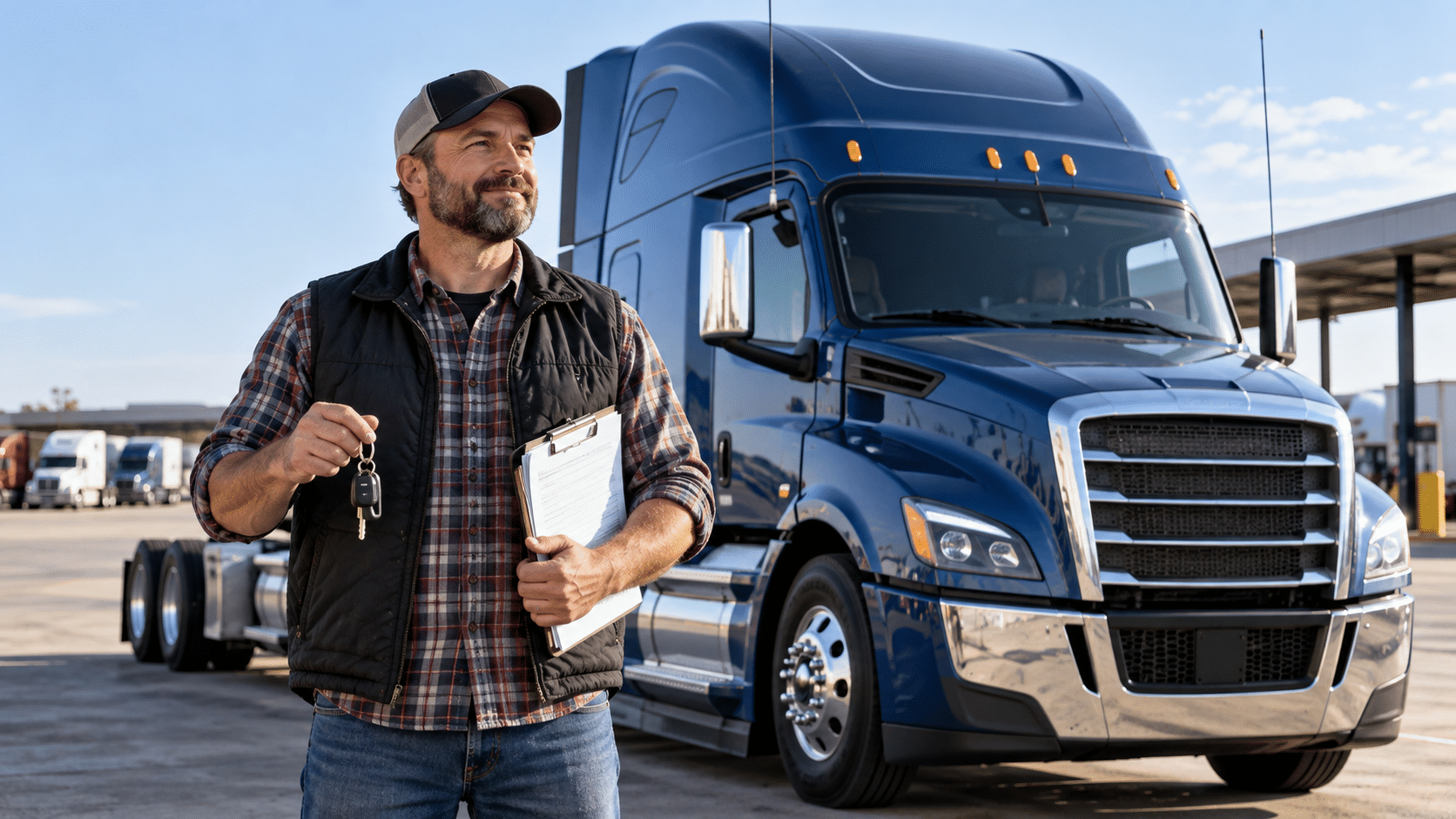
Most truck drivers do not automatically own the trucks they drive.
Some drivers work for companies and use equipment owned by those companies. Others are owner-operators. They buy, finance, or lease their own trucks and run them as their own business.
Knowing the difference is important. Ownership affects how drivers receive payment, how they find loads, and the level of risk they take on.
Some do, but many do not. In trucking, “truck driver” is a broad term that can describe a company employee, a leased owner-operator, an independent carrier, or a fleet owner. A company driver usually drives a truck owned or leased by the carrier, while an owner-operator is responsible for the truck and many of the business costs attached to it.
That distinction is why the answer to “do truck drivers own their trucks” depends on the job model. A driver can spend years behind the wheel without owning equipment, and another driver may own a tractor but still haul under a carrier’s operating authority. Ownership is less about the CDL and more about the business structure behind the driver.
For newer drivers, this is an important reality check. The U.S. Bureau of Labor Statistics reported a median annual wage of $58,640 for heavy and tractor-trailer truck drivers in May 2025, but that figure reflects wage data for employed drivers, not the net income of owner-operators after expenses. (bls.gov)
The easiest way to understand truck ownership is to compare the most common driver categories. Each model can be legitimate, but the pay structure, responsibility, and freedom are very different.
| Driver model | Who usually owns the truck? | How the driver usually earns | Main tradeoff |
|---|---|---|---|
| Company driver | Carrier or fleet | Hourly, per mile, salary, or activity pay | Less business risk, less control |
| Lease-purchase driver | Carrier, leasing company, or driver over time | Settlement after deductions | Possible path to ownership, but contract terms matter |
| Leased owner-operator | Driver owns or finances truck | Percentage of load revenue or mileage rate | More control, more expenses |
| Independent owner-operator | Driver or driver’s business | Revenue from direct customers, brokers, or load boards | Highest independence, highest admin burden |
| Fleet owner | Business owns multiple trucks | Profit after drivers and operating costs | More scale, more management |
Company driving is often the simplest entry point. The carrier typically handles equipment, dispatch, insurance, compliance systems, and many maintenance decisions. That can be a good fit for someone comparing a new truck driver salary against the cost and uncertainty of running a truck as a small business.
Owner-operator work is different. The driver may choose lanes, negotiate rates, review broker freight loads, and decide whether a truck freight load is worth the fuel, time, and deadhead miles. That freedom is valuable, but it comes with financial responsibility every week, not just when the truck is moving.
Truckers get paid through several truck driver compensation models, and the right model depends on whether the driver is an employee or operating a business. Company drivers may be paid by the mile, by the hour, by salary, by load, or through a mix of base pay and bonuses. Owner-operators are generally paid through settlements based on load revenue, percentage contracts, or agreed rates, then must subtract business costs.
Common pay models include:
For company drivers, gross pay and take-home pay are usually easier to understand because taxes and benefits are handled through payroll. For owner-operators, gross revenue can look impressive, but net income depends on cost per mile, maintenance discipline, fuel prices, insurance, and the quality of the freight they accept.
Owning the truck changes the driver’s role from employee to business operator. The driver is no longer only asking, “How many miles can I run?” They also need to ask, “What does each mile cost me, and does this load protect my profit?”
OOIDA’s 2024 Freight Rate Survey reported average operating cost per mile figures of $1.77 in 2020, $2.09 in 2021, $2.38 in 2022, $2.08 in 2023, and $2.00 in 2024 among surveyed owner-operators. The same report noted that owner-operators who knew their operating costs earned, on average, $0.26 more per mile than those who did not. (ooida.com)
Typical truck owner operator expenses include:
The real issue is not whether ownership is “better.” It is whether the owner has enough margin, freight consistency, and discipline to handle both good weeks and slow ones.
Owner-operators find available loads through carriers, dispatch services, direct shippers, freight brokers, and load boards. A leased owner-operator may receive freight from the carrier they are signed on with, while an independent carrier may search for broker freight loads or build direct customer relationships.
Load boards can be useful because they show posted freight by lane, equipment type, pickup date, rate information, and broker details. Many drivers search for the best owner operator load boards because they want more control over where they run and what they accept. The best load board for owner operators is not simply the one with the most posts; it is the one that helps a driver compare rates, reduce deadhead, check broker reliability, and book freight that fits their operating cost.
A practical load decision should include:
Owner-operators who want consistent dry van freight may prefer working with a carrier program rather than handling every broker conversation alone. Hora Express offers owner operator jobs and dedicated information for drivers interested in dry van owner operator jobs, which can be helpful for drivers comparing independence with operational support.
Trucking contracts for owner operators should clearly explain pay, deductions, responsibilities, insurance, equipment rules, termination terms, and how disputes are handled. A strong contract removes guesswork before the first load is booked. A vague contract can turn a good-looking rate into a frustrating business relationship.
Before signing, an owner-operator should review:
Drivers should read contracts slowly and ask questions in writing. If a contract involves a lease-purchase arrangement or major long-term financial obligation, it is wise to have a qualified professional review it before committing.
The better path depends on the driver’s experience, risk tolerance, financial cushion, and interest in running a business. A company driver can focus more on safe driving, service, and schedule. An owner-operator has more control, but also has to manage revenue, expenses, taxes, maintenance, and freight choices.
A company role may fit best if you want predictable payroll, less administrative work, and a clearer new truck driver salary path. It can also be a smart way to learn lanes, shippers, appointment systems, and life on the road before taking on equipment debt.
An owner-operator path may fit if you understand cost per mile, can maintain cash reserves, and want more say in loads and lanes. The strongest owner-operators think like business owners first. They know when to accept a load, when to negotiate, and when to say no.
So, do truck drivers own their trucks? Many company drivers do not, while owner-operators and small fleet owners often do. The difference affects nearly every part of the job: pay, taxes, expenses, dispatch, freight selection, and long-term financial risk.
If you are deciding between company driving and ownership, start with the numbers. Compare likely pay, equipment costs, available loads, insurance, downtime, and the support you would receive from a carrier or partner. Truck ownership can create opportunity, but only when the freight, contract, and cost structure make sense together.
Flatbed transportation services help move freight that does not fit neatly inside a standard dry…
Truck driver pay can look simple from the outside, but the real number depends on…
Local routes can give owner operators a way to stay closer to home while still…
A pre trip inspection checklist helps CDL drivers inspect a commercial motor vehicle before driving.…
Truck driver grants and training-assistance programs can help eligible applicants pay for CDL training, truck…
CDL points usually mean points added to a driver’s motor vehicle record after traffic violations.…