
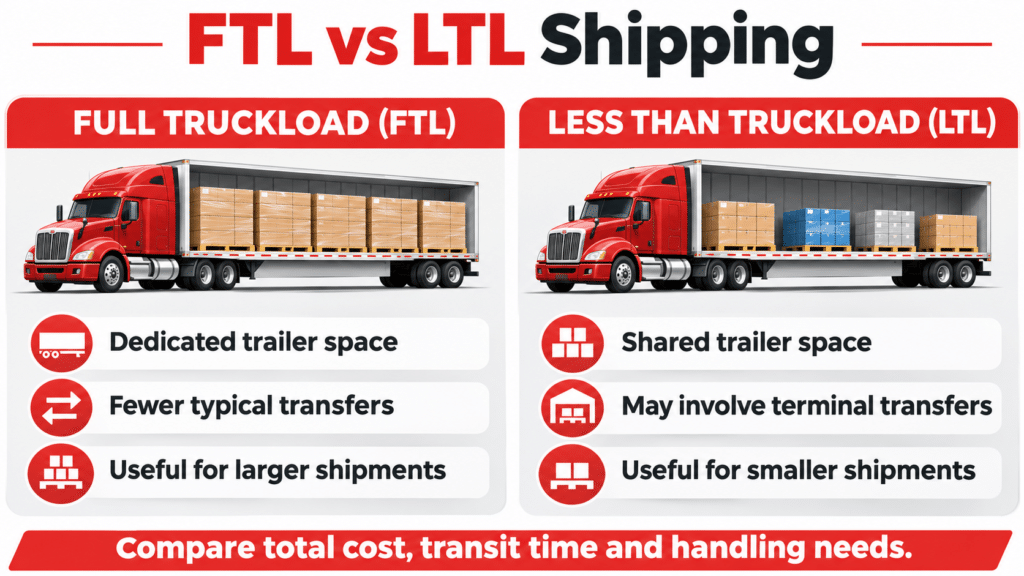
When comparing full truckload vs less than truckload shipping, start with the size of your shipment and the service you need. Full truckload (FTL) shipping typically dedicates a truck or trailer to a single shipment. Less than truckload (LTL) combines freight from multiple shippers. Choose FTL when you need dedicated capacity or have enough freight to use it efficiently. LTL can suit smaller shipments when shared handling and a longer transit window are acceptable.
What is the difference between full truckload vs less than truckload shipping?
With FTL, a shipment usually travels in one trailer from pickup to delivery. With LTL, the carrier combines shipments, which may pass through terminals and change trucks. Both services can move commercial freight, but their handling, pricing, and schedules differ.
When does full truckload make sense?
Consider FTL for a shipment that fills much of a trailer, needs a dedicated vehicle, or requires fewer transfers. A direct move may also help with freight that needs close control over loading and unloading. For cargo that needs an open trailer, read about the advantages of flatbed transportation. Dedicated capacity does not automatically guarantee a delivery time, so confirm appointments and service terms.
When should you choose LTL?
LTL is often worth comparing when your shipment uses only a portion of a trailer. You pay for shared capacity under the carrier’s pricing rules rather than booking the entire vehicle. Obtain a quote based on accurate weight, dimensions, freight class, and any required accessorial services.
Compare the complete cost
When comparing full truckload vs less than truckload costs, do not compare the base rates alone. Ask about liftgate service, limited-access locations, residential delivery, appointment fees, detention and storage. For LTL, inaccurate measurements or classification can trigger a reweigh or reclassification. For FTL, ask how the carrier handles waiting time and extra stops.
How should you prepare freight?
Measure each packaged piece and give the carrier its actual weight. Use suitable pallets, packaging, and labels, and explain whether the freight can be stacked. Photograph the shipment before pickup and check the bill of lading for errors. Identify unusual dimensions, handling needs, or delivery restrictions before accepting a quote.
Which option is faster?
FTL can reduce transfers, but the actual delivery date depends on the lane, availability, and appointments. LTL networks vary too. Compare quoted transit times and ask whether the date is guaranteed or estimated.
Before you book
Request both quotes using the same shipment details. Compare total price, transit time, liability coverage, and handling requirements. Explore Hora Express freight transportation services or contact our team to discuss your shipment and equipment needs.
- Packaged dimensions and total weight
- Pickup and delivery locations and hours
- Loading equipment and access restrictions
- Service level, coverage, and full quoted cost
A practical example: three pallets or a full trailer?
Imagine a manufacturer sending three standard pallets to a customer several states away. If the products are packed securely and the customer can accept a normal delivery window, an LTL quote may offer a practical starting point. The carrier can combine that freight with shipments from other businesses. The shipper should still disclose the weight, dimensions, stacking restrictions, and delivery requirements.
Now imagine the same manufacturer ships enough pallets to use most of a trailer. A dedicated truckload may be easier to plan, and the price difference may be smaller than expected. Ask both providers for written quotes. The best choice between full truckload vs less than truckload depends on the lane, freight, timing, and available capacity.
How does freight class affect an LTL quote?
Freight class helps carriers rate many LTL shipments. Classification can involve factors such as density, handling, stowability, and liability. Classification rules can change, so ask your carrier or logistics provider to confirm the current classification for your product and packaging.
Density is useful information. Measure the packaged shipment, including the pallet, and supply the actual weight. Do not guess at the class or leave out an overhanging crate. If the carrier finds a different weight or classification, the final bill may change.
FTL pricing uses a different approach. A truckload quote commonly reflects the lane, equipment, market conditions, timing, and any extra services. Ask whether the rate includes fuel and how long the quote remains valid.
What happens if freight gets damaged?
Even a direct truckload needs suitable packaging and securement. LTL freight may be handled at terminals, so the packaging must also withstand the carrier’s handling process. Discuss fragile components, prohibited stacking, and special handling before pickup.
- Check the carrier’s liability limits and exclusions.
- Photograph the shipment and retain pickup records.
- Document visible damage or shortages at delivery.
- Follow the carrier’s claims process and deadlines.
Carrier liability is not the same thing as full cargo insurance. Ask about coverage limits, exclusions, claim deadlines, and required evidence. If standard liability doesn’t meet your needs, discuss additional insurance with a qualified provider before shipping.
At delivery, inspect the shipment when possible. Note visible damage or missing pieces on the delivery paperwork and keep photos, packaging, and records. Follow the carrier’s claim process promptly. The contract and applicable rules determine the details.
Questions to ask before accepting a quote
Can the carrier meet both appointment windows? Do you need a liftgate at either end? Will the freight stay on the same trailer, and is the transit time guaranteed? Ask how detention, redelivery, inside delivery, and limited-access charges work.
Also check who loads and unloads the freight. A driver arriving without the equipment needed at a site can delay delivery and add cost. Sharing that information early makes the quote more useful and helps everyone plan.
Can a small shipment use a full truckload?
Yes. A shipper can book dedicated capacity for a small shipment when timing, handling, or other business needs justify the price. A shared option is not automatically wrong for valuable freight either. The right decision depends on packaging, service terms, liability, and the customer’s priorities.
Final decision
Compare full truckload vs less than truckload using the same shipment details and the full expected cost. The cheapest quote is only useful if the carrier can handle the freight and meet the delivery requirements. Keep your shipment details and final agreement in writing for the people coordinating pickup and delivery.