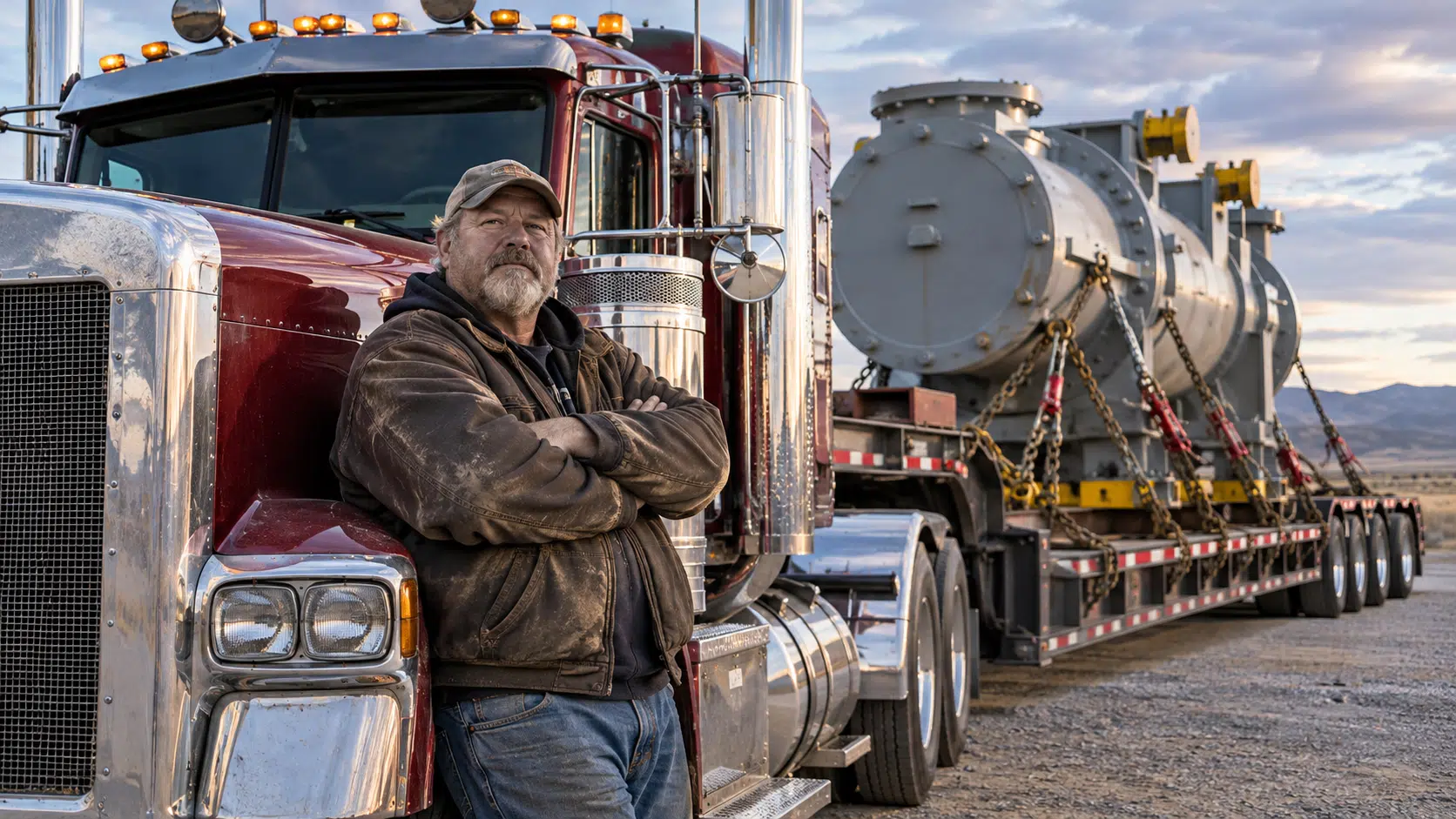
Oversize load trucking requirements depend on the loaded vehicle’s dimensions and weight, the route, and each jurisdiction’s rules. A carrier may need permits, approved routes, escorts, or restricted travel hours. Confirm the requirements before moving the load.
Provide the carrier with accurate cargo length, width, height, and weight, including packaging and attachments. The carrier must also calculate the loaded vehicle’s dimensions and axle weights. A machine’s height on the ground is not the same as its height on a trailer.
Identify lifting points, center of gravity, handling instructions, and whether parts can be removed. Describe loading and unloading equipment, site access, and any obstacles at both ends.
Oversize load trucking requirements often include permits issued by state and other applicable road authorities for roads under their jurisdiction. A route crossing several states may require separate approvals. The permit can specify a route, permitted hours, signage, escorts, and other conditions. Local roads or special structures may have additional requirements.
According to the Federal Highway Administration, individual state agencies issue permits for oversize and overweight operations. Confirm current rules with each authority and the carrier instead of assuming one national permit covers the journey.
The carrier checks the proposed route against the loaded height, width, and weight. Bridges, overhead lines, roadworks, sharp turns and local restrictions can affect the plan. An approved route or travel window can change, so share scheduling changes early and confirm who will coordinate updates.
Escort requirements vary by jurisdiction, route, and load size. Some moves may also require special signs, flags, lighting, or law enforcement coordination. The permit and relevant authority determine the requirements for the specific trip.
Ask for a breakdown of transport, permits, escorts, route surveys, loading and unloading, detention, storage and any other expected charges. Confirm insurance arrangements and who approves additional costs if the load measurements or pickup date change.
Stop and notify the carrier. The team may need to reweigh, revise equipment, change the route or obtain new permits before travel. An existing permit applies to its stated conditions; do not assume it covers a different load.
Source: Federal Highway Administration, Oversize/Overweight Vehicle Permit Contacts: https://ops.fhwa.dot.gov/freight/sw_numbers.htm
No. Oversize refers to dimensions that exceed the applicable limits, while overweight concerns weight limits. A shipment can be oversize, overweight, or both. The relevant limits and permit rules depend on the vehicle, route, and jurisdiction, so a single national number cannot describe every move.
The carrier needs more than the cargo’s total weight. Axle configuration, spacing, and how the load sits on the trailer matter. Provide the best available information before the carrier selects equipment or requests a permit.
Some machinery or equipment can be separated into smaller components. Ask the manufacturer, shipper, and carrier what can be removed safely, how long the work takes, and how the components must be packed. Removing an attachment may change the transport plan, but it can also add labor, handling and reassembly costs.
Permit eligibility for divisible and nondivisible loads depends on applicable law and jurisdiction. Do not assume that simply removing one part will eliminate all restrictions. Discuss the complete plan with the carrier and the relevant permitting authority.
To meet oversize load trucking requirements, the carrier selects equipment based on the load and operating requirements. A step deck, lowboy, or multi-axle trailer may suit different dimensions, weights, and loading methods. The right choice also depends on axle ratings, securement points, clearances, and the availability of suitable loading equipment. Learn more about the advantages of flatbed transportation.
Give the carrier drawings or a specification sheet when available, but verify the actual shipping configuration. A drawing may omit a crate, lifting attachment, or part added after the equipment left the factory. Small measurement errors can affect routing and permit conditions.
Start planning before the desired pickup date. The carrier may need time to assess the shipment, arrange equipment, and submit permit applications. Some routes can require additional review, and travel windows may depend on the permit. Do not assume that a quoted transit time includes all preparation and approval time.
Allow for loading, securement, inspections, and coordination with escorts where required. Share the receiver’s hours and any site restrictions. If a crane or forklift is needed at either end, confirm who books it and whether the equipment can reach the load safely.
The carrier may request a bill of lading, commodity description, shipment dimensions, weight, pickup and delivery contacts, and handling instructions. Depending on the cargo, other documents or customer requirements may apply. Ask the carrier what it needs rather than assuming that every oversize shipment uses the same paperwork.
Keep a copy of the quote and written instructions. Confirm who is responsible for obtaining permits, arranging escorts, and communicating changes. The driver and carrier must carry and follow the documents and conditions required for the move.
Because oversize load trucking requirements depend on the permitted configuration and route, tell the carrier immediately if the equipment, weight, delivery address, or schedule changes. The team can assess whether the route, trailer, permits, or escort plan must change. Avoid loading a different configuration and hoping that an existing permit still applies.
If the route encounters a closure or unexpected clearance problem, the driver should follow the carrier’s procedures and applicable authority instructions. A revised route may require further approval. The customer should know whom to contact if a delay affects the delivery appointment.
Confirm the package dimensions and weight, loading access, special equipment, permits, quote, and named contacts. Ask the carrier which items remain uncertain and when they will be resolved. Clear information at the start helps prevent expensive changes after the truck arrives. Explore Hora Express trucking services or contact our team to discuss your freight.
Learn how to use truck driver job boards, compare listings, verify employers and spot unclear…
Compare step deck owner-operator jobs by freight, pay, equipment requirements, operating costs, route expectations and…
Explore heavy haul driver pay, experience requirements, expenses and the questions drivers should ask before…
Compare full truckload and less than truckload shipping, including costs, handling, delivery times, and the…
Most truck drivers do not automatically own the trucks they drive. Some drivers work for…
Flatbed transportation services help move freight that does not fit neatly inside a standard dry…