
Owner operators love simple answers. Buy a flatbed, run hard, make money. That idea works until you hit your first tall load, your first winter tarp fight, or your first shipper that wants covered freight.
If you are comparing conestoga trailers or asking what is a conestoga trailer, start with the basics. The right trailer changes what you can haul, how fast you load and unload, how often you tarp, and how much stress you carry on every trip.
This guide breaks down step deck vs flatbed vs conestoga in plain language. You will get the key numbers for legal height, deck height, and weight limits, plus a simple way to choose before you spend real money.
Start with the hard limits: height and weight
Most interstate freight runs under the common legal maximum height of 13 ft 6 in. Your trailer deck height decides how much cargo height you can legally carry.
Here is the easiest way to think about it:
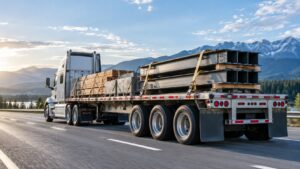
- Flatbed deck height often sits around 60 in, or about 5 ft.
- Step deck lower deck height often sits around 36 to 40 in, or about 3 to 3.3 ft.
- Conestoga usually rides on a flatbed-style deck, so think flatbed height with a rolling tarp system on rails.
Now do the math:
- Flatbed: 13 ft 6 in minus a 5 ft deck leaves about 8 ft 6 in of legal freight height.
- Step deck lower deck: 13 ft 6 in minus about 3 ft 4 in leaves about 10 ft of legal freight height on the lower deck.
That 18 in to 24 in difference changes everything. Taller machinery, crated equipment, and odd construction freight fit much better on a step deck.
Weight matters too. On most interstate runs, you work within the common 80,000 lb gross limit. Trailer weight cuts into payload.
Typical empty weights vary by build, axles, and options:
- Flatbed: often 10,000 to 12,000 lb
- Step deck: often 12,000 to 14,500 lb
- Conestoga: often 13,000 to 16,000 lb because the frame, rails, and tarp system add weight
If you haul dense loads like steel coils, plate, or rebar, payload matters. A lighter trailer can leave more money in your pocket if the shipper pays by the load, not by the mile.
Quick comparison at a glance
| Trailer type | Best for | Biggest win | Biggest pain |
|---|---|---|---|
| Flatbed | General construction freight, steel, lumber, palletized loads | Lowest cost and the widest freight options | Tarping time and weather exposure |
| Step deck | Taller freight, machinery, crated equipment | More legal height room on the lower deck | Heavier trailer and tougher load balance |
| Conestoga | Freight that needs weather protection but loads like a flatbed | Fast cover and fewer tarp battles | Higher purchase cost and heavier tare weight |
A simple decision tree you can use today
1) Does your freight sit taller than 8 ft 6 in on a flatbed?
If yes, pick a step deck. You will stop arguing with permits and start accepting loads.
Examples:
- Skid steers, compact loaders, small excavators
- Crated industrial equipment
- Precast items with odd height
If no, keep going.
2) Do shippers ask for weather protection or no tarps more than once a week?
If yes, conestoga can make sense. You will cover freight fast, and shippers like the clean look.
If no, keep going.
3) Do you want the lowest entry cost and the widest load variety?
If yes, flatbed wins. It also gives you the easiest resale path because the market stays deep.
4) Do you hate tarping so much that it changes your mood?
Be honest. If tarping ruins your day, conestoga earns points even if it costs more. It can also keep you moving when rain or snow hits and everyone else slows down.
Flatbed: the most freight, least drama trailer
Most owner operators start here for a reason. A flatbed lets you haul a huge range of freight:
- Lumber and building materials
- Steel beams, pipe, rebar, and sheet bundles
- Palletized freight that needs crane or forklift access
- Odd loads that need side access
Loading and unloading
Flatbeds shine when the shipper uses forklifts or cranes. You can load from the side, from the rear, or from the top. That flexibility helps when yards stay tight.
Securement and tarping reality
Flatbed freight often demands securement discipline. You will use straps, chains, binders, edge protectors, and dunnage. You will also tarp often.
A real-world tarping estimate:
- Simple lumber tarp job: 30 to 45 minutes if you work smart
- Ugly freight with multiple tiers or sharp edges: 45 to 90 minutes
You can still make great money on a flatbed. You just need to price your time. When brokers say quick and easy, ask what the freight looks like and whether it needs tarps.
Who should pick flatbed?
Pick flatbed if you want:
- The broadest freight pool
- The easiest maintenance and simplest equipment
- A lower trailer payment
- A clean path to switch lanes later
If you want to jump straight into flatbed work with a carrier that understands open deck, start here: Flatbed Owner Operator Jobs
Step deck: the height advantage that opens better freight
Step deck trailers solve one big problem: height. They also solve another problem quietly. Many shippers prefer a step deck for equipment because it loads easier with ramps and gives better ground clearance angles.
What freight fits best on a step deck?
- Taller machinery that exceeds flatbed legal height
- Crated industrial equipment
- Skids and fabricated structures that sit high
- Loads that need ramps and low approach angles
Loading method matters
If you load equipment, you will care about:
- Ramp angle
- Ground clearance
- Where tie-down points sit
- How you balance weight between the upper and lower deck
You can run general flatbed freight on a step deck too, but you will not always win on payload. The trailer weighs more, so your pay has to reflect that.
When step deck beats flatbed on income
Step deck often wins when:
- You avoid permits by using the lower deck height
- You win loads that flatbeds cannot legally haul
- You build relationships with equipment shippers that pay for reliability
If you want that lane, check: Step Deck Owner Operator Jobs
Conestoga: flatbed access with covered freight benefits
Conestoga trailers keep flatbed-style loading but add a sliding tarp system that rides on rails. You still secure the load like a flatbed, but you cover it faster and more consistently.
If you have searched what is conestoga trailer or what is a conestoga trailer, the short answer is this: it is a flatbed-style trailer with a rolling cover that protects freight from weather.
Some carriers call the setup a conestoga flatbed, a conestoga flatbed truck, or conestoga trucking, but the job stays the same. On a conestoga truck, the cover system is part of the job, not an extra tool.
When conestoga makes perfect sense
Conestoga fits best when you haul:
- High-value freight that needs clean protection
- Finished materials that hate rain, road spray, or snow
- Freight that shippers reject if it sits exposed
Common examples:
- Building products that must stay dry
- Wrapped loads where shippers want clean cover
- Industrial items where customers want protection without boxing the freight
People also look at conestoga trailers or a conestoga trailer for sale when they want to cut tarp time without giving up flatbed-style loading.
The time advantage feels real
A good conestoga routine can save time compared to manual tarps. Instead of wrestling heavy tarps in wind, you pull the system forward and lock it down.
Typical cover time ranges:
- Conestoga cover and secure: often 10 to 25 minutes, depending on load shape
- Manual tarp job: often 30 to 90 minutes, depending on difficulty
Time matters because time equals more loads per month or fewer unpaid hours.
The trade-offs you need to accept
Conestoga costs more upfront, weighs more empty, and adds moving parts. You also need room to slide the system, and some shippers stack freight in ways that make the cover harder.
If you are comparing a conestoga trailer for sale with a standard flatbed, pay close attention to tare weight and the way the cover system works in tight docks.
A conestoga step deck is less common, but the same buying logic applies. Ask what deck height you need, what freight you haul, and how often weather protection will matter.
Even with those trade-offs, conestoga can win if you work with customers that value protection and fast turnaround. For some lanes, conestoga trucking is less about raw rate and more about speed, cleanliness, and fewer tarp fights.
If that fits your style, start here: Conestoga Owner Operator Jobs
Seasons: what changes in winter, spring, and peak construction months
Trailer choice feels different by season.
Winter
- Flatbed tarps turn into ice blankets. You will fight wind, frozen straps, and slick decks.
- Conestoga can reduce the worst tarp battles and keep freight cleaner.
- Step deck runs strong with equipment and machinery, but you still deal with snow and ice on chains and binders.
Spring and summer construction
Flatbed and step deck demand spikes when construction ramps up. You will see more lumber, steel, and jobsite deliveries. Step deck can catch equipment moves tied to project starts.
Harvest and industrial cycles
Industrial freight comes in waves. Conestoga can catch manufacturing and building products that need protection during long-haul runs.
Money talk: match your trailer to your business plan
Trailer choice should match how you want to earn.
Choose flatbed if you want the widest freight pool and a lower investment.
Choose step deck if you want access to taller freight and equipment lanes without constant permits.
Choose conestoga if you want speed, cleaner protection, and less tarp pain, and you can handle higher cost and higher empty weight.
If you plan to step into oversized or specialized work later, you can also build a path toward heavy haul. Heavy haul involves permits, route planning, and specialized securement, but it can also open higher paying freight for the right operator. Explore that lane here: Heavy Haul Owner Operator Jobs
Practical checklist before you buy or switch
Ask these questions before you commit:
- What freight do brokers and shippers offer in your lanes every week?
- How often do they require tarps or weather protection?
- Do you see taller freight that forces permits on a flatbed?
- Do you run dense freight where trailer empty weight cuts payload?
- Do you load with forklifts, cranes, ramps, or all three?
- Do you want speed at the dock or maximum flexibility?
Answer those honestly, then pick the trailer that fits your reality, not someone else’s highlight reel.
Next step
If you already own a trailer, you can still choose the lane that fits you best. If you plan your next upgrade, use the decision tree above and make the move with purpose.
Browse these options and see what fits your goals:
Q&A
Question: What is the biggest practical difference between a flatbed and a step deck?
Short answer: The biggest difference is legal freight height. A flatbed deck often sits around 60 in high, leaving about 8 ft 6 in of legal freight height under a 13 ft 6 in overall height limit. A step deck lower deck often sits around 36 to 40 in high, giving roughly 10 ft of legal freight height. That extra room helps with taller machinery, crated equipment, and construction freight that may not fit legally on a standard flatbed.
Question: When does a conestoga make more sense than a regular flatbed?
Short answer: A conestoga makes sense when shippers regularly require weather protection, clean cover, or faster tarp handling. It keeps flatbed-style side and crane access but uses a sliding tarp system instead of manual tarps. The trade-off is higher purchase cost, heavier empty weight, and more moving parts, so it works best when customers value protection and fast turnaround enough to support the added cost.
Question: Why does trailer empty weight matter so much for owner operators?
Short answer: Trailer empty weight reduces how much payload you can legally haul under the common 80,000 lb gross limit. Flatbeds are usually lighter than step decks and conestogas, which can matter on dense freight like steel coils, plate, rebar, or other heavy loads. If a shipper pays by the load instead of by the mile, carrying more legal payload can directly affect income.
Question: Can a step deck still haul regular flatbed freight?
Short answer: Yes, a step deck can haul many general flatbed loads, but it may not always be the most profitable tool for that work. Step decks are usually heavier, and load distribution between the upper and lower deck requires more attention. They shine most when the freight needs the lower deck height, ramps, or better loading angles.
Question: Which trailer is best for a new owner operator who wants flexibility?
Short answer: A flatbed is usually the best starting point for maximum flexibility because it offers the broadest freight pool, lower trailer cost, simpler equipment, and an easier resale path. However, if the owner operator’s lanes regularly include taller equipment or weather-protected freight, a step deck or conestoga may fit the business plan better.